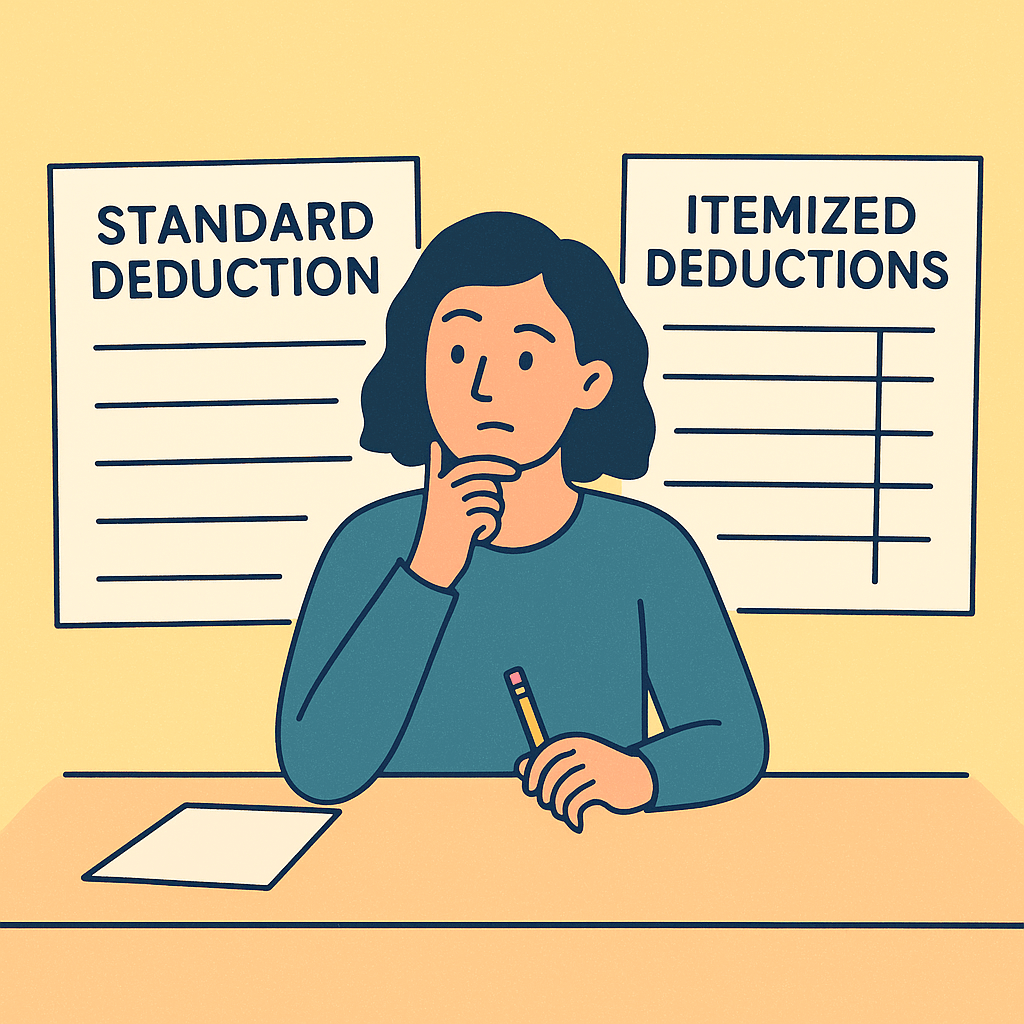
When you’re fresh out of the “EZ form” life, tax season suddenly comes with choices. The big one? Should you itemize your deductions or just take the standard deduction?
It sounds complicated, but don’t worry—we’ll make it simple.
What Does “Itemizing” Mean?
Instead of taking the standard deduction (a flat amount everyone gets), you add up certain expenses—like mortgage interest, state taxes, or medical bills—and claim those instead. That’s called itemizing deductions.
The catch? Itemizing only helps if your total deductions are more than the standard deduction.
Common Expenses You Can Itemize
- Mortgage interest (hello, new homeowners).
- State & local income taxes or sales taxes.
- Property taxes.
- Medical expenses that exceed a percentage of your income.
- Charitable donations.
Pros of Itemizing
- Could save you money if your deductible expenses are high.
- Lets you capture tax breaks that the standard deduction ignores.
- Feels like “adulting unlocked” when you buy a home, give to charity, or have big life changes.
Cons of Itemizing
- More paperwork (you’ll need receipts, statements, or records).
- Takes more time to prepare.
- Only worth it if your expenses are bigger than the standard deduction.
Quick Rule of Thumb
- Standard deduction works best for most renters and those without major medical or property expenses.
- Itemizing usually makes sense if you bought a home, had significant medical costs, or made large charitable donations.
Why It Matters
Choosing the right deduction method can change your refund—or how much you owe. For first-time homeowners especially, it’s worth running the numbers both ways.
👉 General info only—confirm with current IRS guidance or a tax professional.
Make Adulting Easier
Not sure if itemizing beats the standard deduction this year? We’ll crunch the numbers for you and make sure you don’t leave money on the table.
✅ Book your return in 2 minutes → makeadultingeasier.com/book