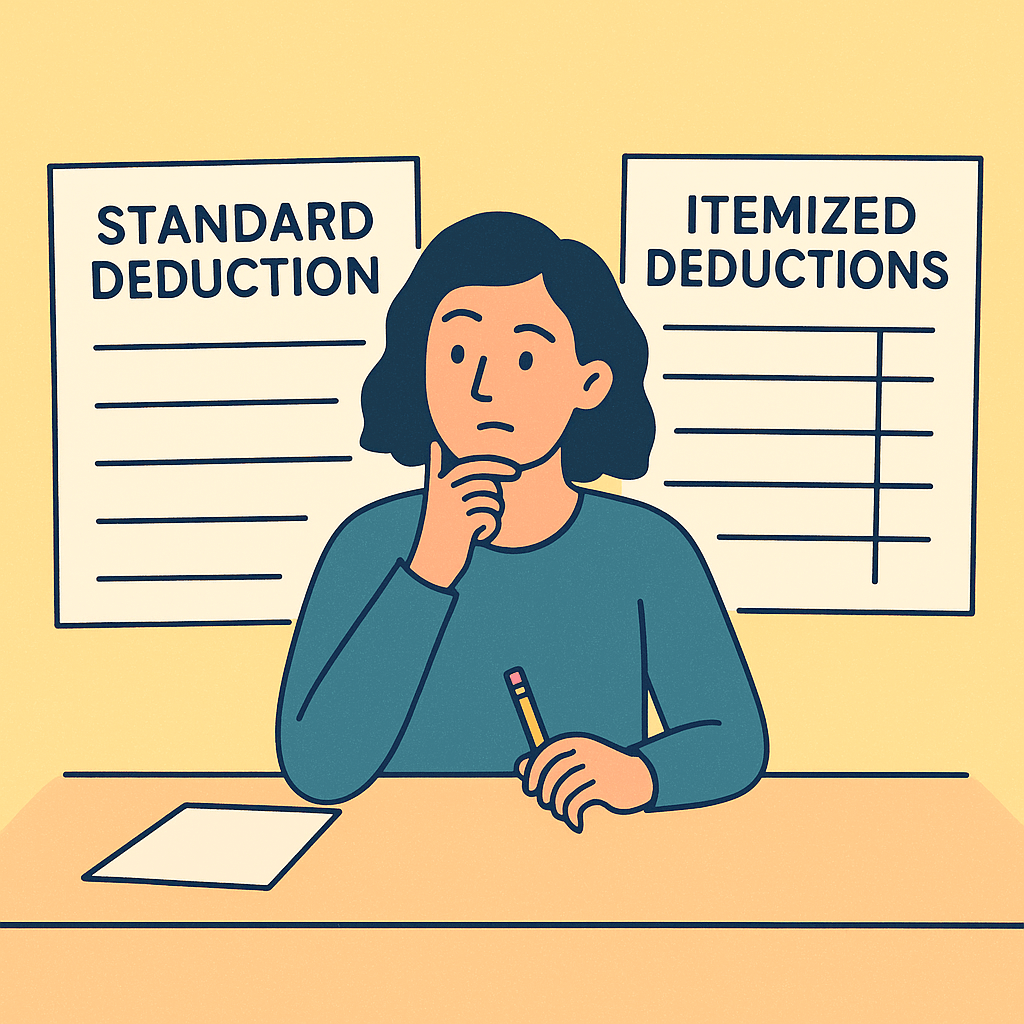
If taxes were a board game, the standard deduction would be the free pass that lets you skip a few spaces. Instead of itemizing (listing out every deductible expense like mortgage interest, medical bills, or charitable donations), the IRS gives you a flat amount you can subtract from your income before taxes are calculated.
In plain English: it lowers the income you get taxed on — which usually means a smaller tax bill or a bigger refund.
How It Works
- Everyone gets one. The amount depends on your filing status (single, married, head of household, etc.).
- It changes every year. The IRS adjusts it for inflation.
- Itemizing vs. Standard. You pick whichever gives you the bigger deduction. For most first-time homeowners, newlyweds, and young families, the standard deduction is the better deal.
Why It Matters
Think of it as your built-in tax discount:
- You don’t need receipts or paperwork to claim it.
- It’s automatic — you just check the right box on your return.
- It can be worth thousands off your taxable income.
When You Might Skip It
Some people benefit from itemizing instead, like if:
- You paid a lot in mortgage interest or property taxes.
- You had major medical expenses.
- You gave significant charitable donations.
But if you’re new to adulting, odds are the standard deduction is your best friend.
Quick Example
Let’s say you made $60,000 this year. If the standard deduction for your filing status is around $14,000, you’re only taxed on $46,000. Simple as that.
(General information only—confirm with current IRS guidance or a tax professional.)
Bottom Line
The standard deduction is the IRS’s way of giving you a break without the hassle. Unless you have big-ticket deductions to itemize, it’s the easiest way to lower your taxable income.
Want to be sure you’re getting the biggest deduction possible? 👉 Book your return in 2 minutes — skip the stress