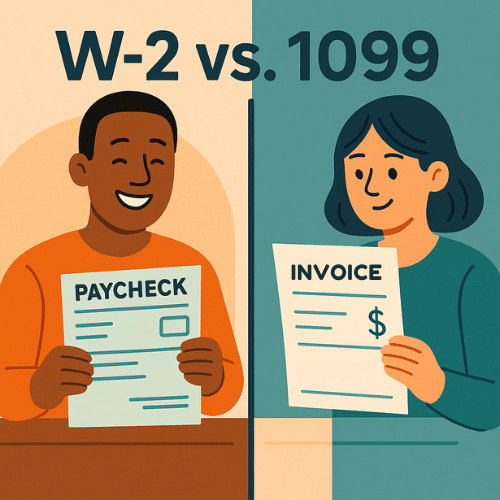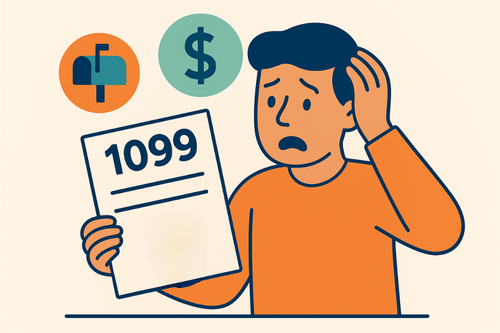
If you’re used to W-2 jobs, this feels strange. But W-9s come into play when you’re not an employee.
Common reasons you’ll be asked for one:
- Freelance or contract work – You designed a logo, built a website, or delivered food through an app.
- Side hustle money – Consulting, tutoring, photography gigs, etc.
- Other income types – Payments like rent, prizes, or dividends may also trigger a W-9.
Basically: if a business pays you outside of payroll, they may need a W-9 to keep their books IRS-ready.
The $600 Rule (and Why Businesses Collect W-9s Early)
You’ll often hear:
“You only need a 1099 if you make $600 or more.”
That’s true for reporting—but many businesses ask for a W-9 before they even know how much they’ll pay you. Why?
- It saves them a paperwork scramble later.
- It ensures they can issue a 1099 if you cross that $600 line.
So don’t be surprised if you get the request after your very first gig.
How to Fill Out a W-9
- Download the form straight from IRS.gov.
- Fill in your legal name (or your business name if you operate under one).
- Add your taxpayer ID (SSN or EIN).
- Sign and date.
⚠️ Security tip: Don’t casually email your Social Security Number. Ask your client if they have a secure portal, or send through an encrypted file-sharing tool.
What Happens if You Don’t Provide One?
Ignoring a W-9 request isn’t the move. If you don’t give one:
- The business may withhold 24% of your payment (“backup withholding”) and send it to the IRS.
- You may not get hired for future work—they can’t risk being noncompliant.
Bottom line: better to hand over the W-9 securely than lose money.
Why a W-9 Matters for Your Taxes
Here’s the real takeaway: If someone asks you for a W-9, it means:
- You’re being treated as self-employed (not an employee).
- No taxes are withheld from your payments.
- You’re responsible for reporting that income at tax time.
This can surprise a lot of first-time side hustlers:
- You’ll likely owe income tax AND self-employment tax.
- You might need to make quarterly estimated payments if it becomes steady income.
- You can (and should) track business expenses to offset that income.
💡 Pro tip: Use our free Expense Tracker to snap receipts, log mileage, and stay organized all year.
FAQs About W-9s
💬 Do I need to give a W-9 if I make less than $600?
Yes, you may still be asked. The $600 rule is about whether a business must file a 1099—not whether they collect your W-9.
💬 Is filling out a W-9 dangerous?
Not if you share it securely. The risk is in how you send it. Don’t email your SSN unencrypted.
💬 What if I don’t want to use my SSN?
You can apply for an EIN (Employer Identification Number) from the IRS and use that instead. Many freelancers prefer this.
💬 Will the IRS come after me just because I sent in a W-9?
Nope. The W-9 doesn’t get sent to the IRS. It only sits with your client until tax season.
The Smart Move: Plan Ahead
A W-9 isn’t a problem—it’s a signal. It means your taxes are more complex than a simple W-2 job. The good news? With a little planning, you can:
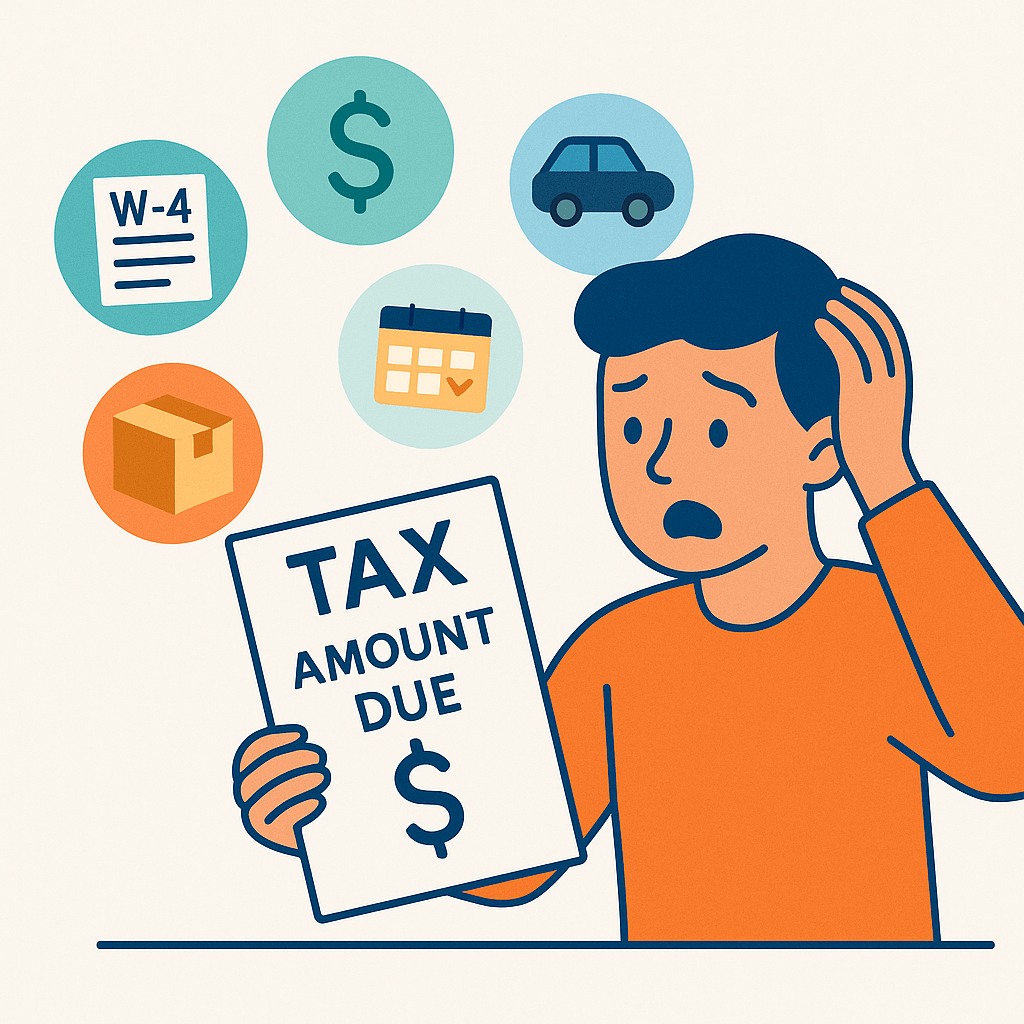
- Avoid surprise tax bills in April
- Deduct legitimate business expenses
- Stay in the IRS’s good graces (without overpaying)
👉 Best next step: Book a quick appointment with a tax pro who knows side hustles. We’ll help you set up recordkeeping, understand deductions, and avoid surprises.
Bottom Line
Getting asked for a W-9 is normal. It just means you’re being paid as an independent contractor, and your client needs your info for their records.
The real question is: Are you ready for the tax side of it?
Don’t let the IRS take you by surprise.
👉 Book your return in 2 minutes
👉 Or grab our free Expense Tracker to start off on the right foot.
⚖️ General information only—confirm with current IRS guidance or a tax professional.