Summer’s here—and so are the side gigs. Whether you’re driving for Uber, pet-sitting, tutoring, or selling at weekend markets, that extra cash feels great…until tax time.
Here’s how to handle those short-term hustles without losing your summer vibe.
What Counts as a “Side Hustle”?
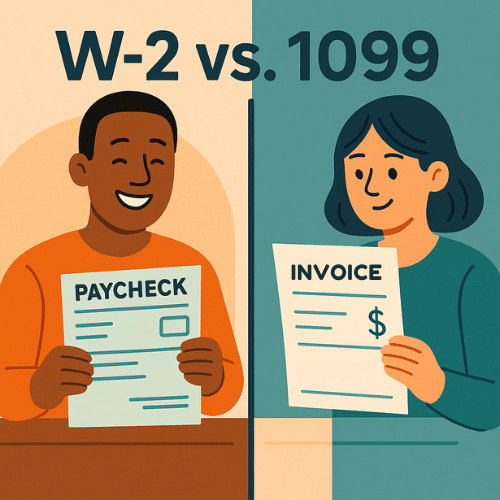
If you’re earning money outside your W-2 job, it usually counts as self-employment. Common summer gigs:
- Driving/delivery apps.
- Babysitting or tutoring.
- Freelance projects.
- Craft fairs or online sales.
- Pet sitting or dog walking.
Even if it’s cash under the table, the IRS still considers it income.
Do You Have to Report It? (Spoiler: Yes)
- $600+? You may get a 1099 form.
- Less than $600? Still reportable—you just won’t get a form in the mail.
- Cash gigs? Same deal. Report it.
The IRS doesn’t care if it was one Saturday or the whole summer—it’s still income.
The Tax Twist: Self-Employment Tax
Side hustle money isn’t just subject to income tax—it also triggers self-employment tax (that’s Social Security and Medicare). It can surprise first-timers who only ever had W-2 jobs.
How to Keep It Simple
- Track everything. Mileage, supplies, fees, and payments—your phone notes app works fine.
- Save a slice. Put aside 20–25% of side hustle income for taxes so you’re not scrambling later.
- Know deductions. Expenses like gas, craft supplies, or platform fees may be deductible.
Why It Matters
Short-term gigs can be great for extra cash, but they also add complexity at tax time. Handle it right now, and you’ll thank yourself next April.
👉 General info only—confirm with current IRS guidance or a tax professional.
Make Adulting Easier
We’ll make sure your summer side hustle doesn’t turn into a tax-time headache. You enjoy the sunshine—we’ll handle the forms.
✅ Book your return in 2 minutes → makeadultingeasier.com/book